




Service Charge for Apartments in Parklands: What It Covers and How to Compare Developments
The service charge on apartments in Parklands is a recurring fee each owner pays towards running the building: security, cleaning, lifts, backup power, shared utilities, insurance, amenity upkeep and professional management. It is usually set from an annual budget and shared among owners in proportion to the size of each unit. When comparing luxury apartments in Parklands, the figure itself matters less than what it buys, how it is calculated and how transparently it is managed.
For buyers looking at apartments for sale in Parklands, Nairobi, the service charge is one of the few costs that continues for as long as you own the home. Understanding it before you commit is part of buying well.
What a service charge on apartments in Parklands typically covers
Every development structures its budget slightly differently, but in premium apartments in Parklands the service charge commonly funds the following:
- Security: manned gates, guards, access control and CCTV monitoring of common areas.
- Cleaning and housekeeping of lobbies, corridors, stairwells, parking levels and refuse areas.
- Lifts: routine servicing, inspections and repairs, which become more significant in taller buildings.
- Backup power: generator servicing and fuel for common areas and, in many developments, for individual units during outages.
- Water systems: pumps, storage tanks and, where a development has one, borehole maintenance and treatment.
- Common-area utilities: lighting, water and power for shared spaces.
- Amenities: upkeep of pools, gyms, lounges, children's play areas and landscaped gardens.
- Building insurance for the structure and common property.
- Management fees for the property manager or facilities management company.
- A reserve or sinking fund contribution, set aside for major future works.
What it generally does not cover is equally important: your own metered electricity and water, repairs inside your apartment, your contents insurance and statutory charges such as land rates or ground rent, which are often billed separately. Ask any developer to confirm exactly where each of these sits.
How service charges are set
A service charge should begin with a line-by-line operating budget: the expected annual cost of every service listed above. That total is then divided among owners, usually according to each unit's floor area or a defined share of the building, so a larger residence carries a larger portion.
Who decides, and when
In new apartments in Parklands, the developer or an appointed property manager typically prepares the first budget, because the building is new and no operating history exists yet. Over time, responsibility shifts to the owners. Under Kenya's Sectional Properties Act, 2020, once a sectional plan is registered, the unit owners form a management corporation responsible for the building's common property, including how it is maintained and funded. In practice, this means owners gain a formal say in budgets, contractors and the level of service they are paying for.
Why some buildings cost more to run
Two buildings in the same neighbourhood can carry very different service charges for sound reasons. High-rise residences need more lift capacity and more robust fire and water systems. Developments with extensive shared facilities need staff, chemicals, equipment and eventual replacement for each of them. Generous landscaping, round-the-clock concierge services and larger common areas all add cost. A higher figure is not automatically poor value, and a low one is not automatically a saving if essential maintenance is being deferred.
If you are weighing up facilities you may or may not use, our article on whether resort-style amenities are worth it looks at that question in more depth.
Service charge versus sinking fund
The service charge pays for the day-to-day running of the building. A sinking fund, sometimes called a reserve fund, is money set aside for large, infrequent expenses: replacing lifts or generators, repainting the exterior, waterproofing roofs or refurbishing a pool. Well-run buildings build this fund gradually so owners are not asked for a sudden special levy when major works fall due.
When reviewing any development, ask whether a sinking fund exists, how much is contributed each period and how it is held. A clear answer is a good sign of considered residential planning and long-term thinking.
How to compare service charges across Parklands developments

Headline numbers rarely compare like with like. A more reliable approach is to work through the same questions for each development on your shortlist:
- Request the budget breakdown. A reputable developer or manager should be able to show what the charge is made up of, not just the total.
- Compare on the same basis. Convert each figure to the same unit (per square foot or per square metre, per month) so a smaller apartment's lower bill does not mislead you.
- Check what is included. Does the charge cover generator fuel for your unit? Water? Amenity access? Two similar figures can hide very different levels of service.
- Ask about the sinking fund. A building without one may look cheaper today and cost more later.
- Ask about upfront payments. Many developments collect a service charge deposit or several months in advance at handover. Budget for this alongside your other purchase costs.
- For completed buildings, ask for history. How has the charge moved over recent years, are accounts shared with owners and are they audited?
- Understand the management arrangement. Who manages the building now, and how will that transition to the owners' corporation?
- Consider tenants, if you are investing. In many Nairobi lettings the landlord pays the service charge, so it directly affects your net rental position. A well-maintained building, however, tends to support stronger tenant interest over time.
Reading the service charge as part of long-term property value
For discerning buyers, the service charge is best understood as the cost of keeping the building in the condition you bought it in. Lifts that work, clean common areas, reliable water and power, a secure compound and well-kept gardens are what make a residence comfortable to live in and appealing to the next buyer or tenant.
Choosing a home is about more than its address. It is about the space, comfort, convenience and confidence it brings to everyday life, and much of that confidence depends on how well a building is run after the keys are handed over. Parklands, with its established residential character and proximity to Westlands, Karura Forest and the city centre, rewards developments that are maintained with care.
Service charges at SMB Properties developments
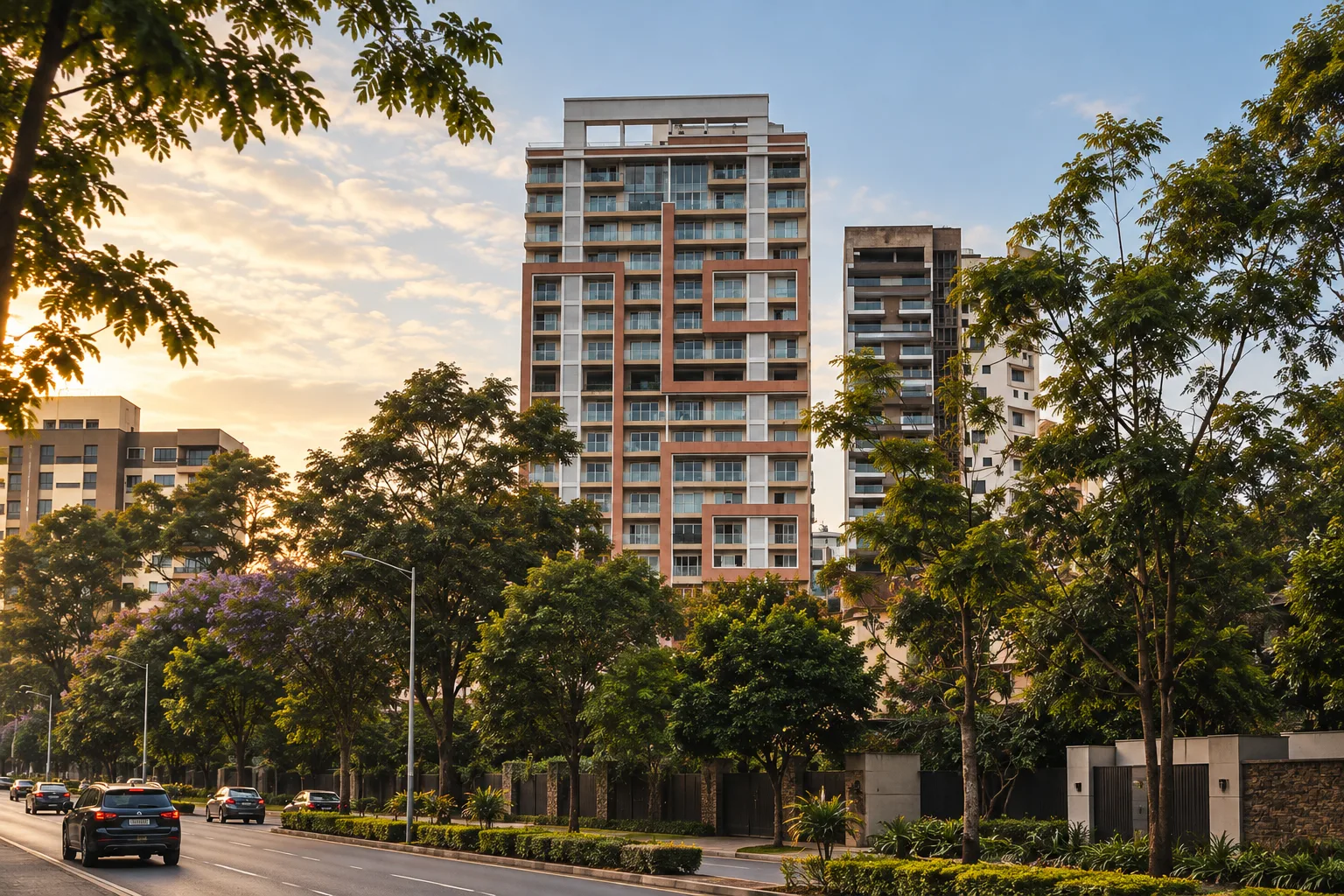
As an established Kenyan real estate developer with over 18 years in real estate development, SMB Properties has seen buildings through planning, construction, handover and occupation. That experience shapes how we think about running costs from the design stage: durable materials, sensible layouts and services that are practical to maintain.
Le Mirage, our premium high-rise in the Westlands/Parklands area, has been planned as a 31-floor residential development with a significant amenity offering, which naturally informs how its operating budget is structured. Our completed SMB Karura development offers a different, forest-facing setting, which you can read about in our piece on forest-facing apartments at Karura View. Each project has its own service charge structure, and we share current, verified details directly with prospective buyers rather than quoting general figures.
You can explore our wider range of luxury apartments in Westlands and Parklands, or view all of our luxury apartments in Nairobi and Mombasa to compare completed, ongoing and upcoming developments.
If you would like a service charge breakdown for a specific residence, or wish to schedule a site visit, contact our team and we will take you through the details.
Frequently asked questions
Who pays the service charge on a rented apartment in Parklands?
In most Nairobi lettings the owner pays the service charge, and it is factored into the rent. Some leases pass part of it to the tenant, so the arrangement depends on your tenancy agreement. Investors should include it when estimating net rental income.
Can the service charge on my apartment increase?
Yes. Service charges are based on actual running costs, so they can change as fuel, staffing, insurance and maintenance costs change. Under the Sectional Properties Act, 2020, owners collectively form a management corporation, which gives them a formal role in reviewing budgets.
Do I pay service charge before I move in?
Many developments ask for a service charge deposit or several months paid in advance at handover. The amount and timing vary by project, so ask the developer to confirm it in writing before you sign.
Is a lower service charge always better?
Not necessarily. A low figure can mean fewer services, no sinking fund or deferred maintenance, which may lead to special levies later. Compare what is included and the cost per square foot rather than the headline total.
How can I find out the service charge for an SMB Properties apartment?
Contact the SMB Properties team for the current breakdown for the specific development and residence you are considering. We share verified, project-specific details directly and can arrange a site visit so you can see the building and its amenities in person.
ENQUIRE NOW
Our expert team will help you find the perfect location ,
for your dream home in Nairobi and Mombasa or you can explore our gallery
of luxury residential complexes at your convenience.